 Kestrel Journal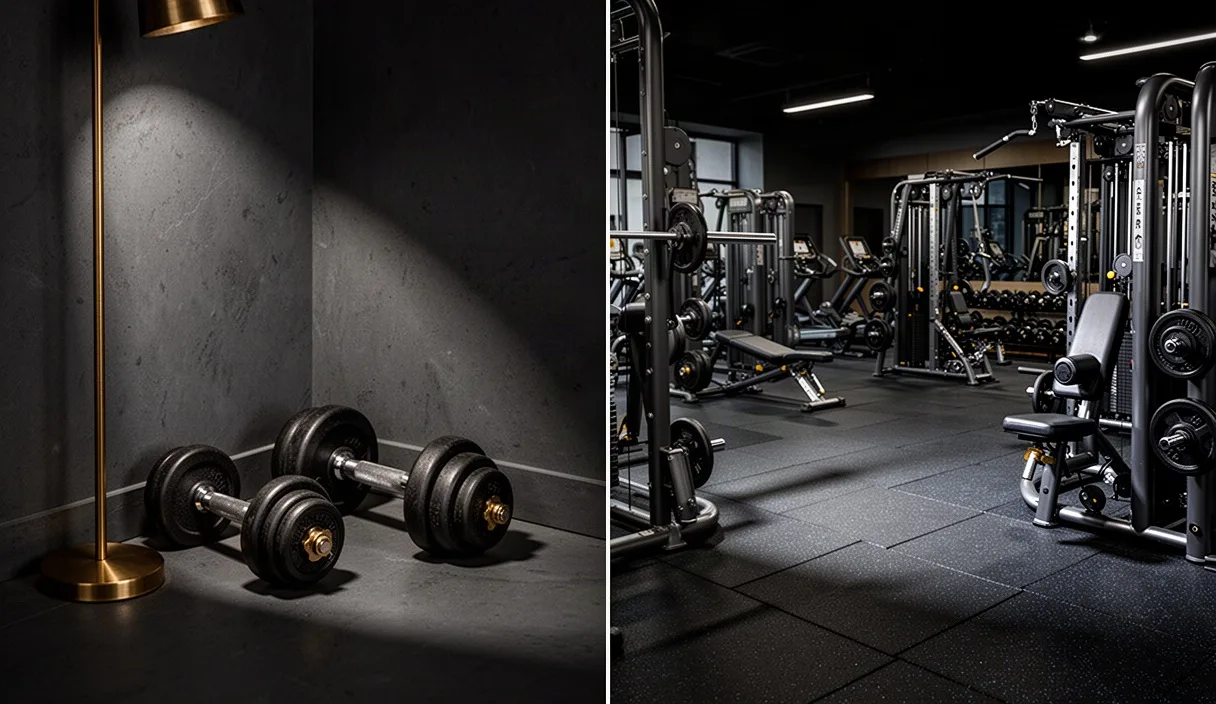

Choosing between training at home and joining a gym is one of the more practical decisions a person makes when starting or resuming a fitness routine. The right answer depends less on which option is objectively superior and more on which one aligns with a person's budget, available space, and daily schedule. This article sets out the costs, equipment, and accountability factors involved in each path, so that readers may weigh their own circumstances with clearer information.
Neither approach guarantees results on its own, and a physician or qualified trainer should be consulted before beginning any new exercise programme, particularly for individuals with existing health conditions. What follows is a comparison of the practical realities, not a promise of outcomes.
Why This Comparison Matters Before You Commit
Many people select a gym membership or a set of home equipment based on habit or convenience, only to abandon the choice within a few months. Industry surveys, including data cited by the International Health, Racquet & Sportsclub Association, have long suggested that a meaningful share of new gym members reduce their visits substantially within the first ninety days. A similar pattern occurs with home equipment purchases that go unused after the initial enthusiasm fades.
Committing to either option without considering long-term fit often results in wasted money, whether that money was spent on a twelve-month contract or on a treadmill that becomes a clothes rack. A brief, honest assessment beforehand, covering budget, space, and personal discipline, tends to save both money and frustration later.
This comparison is also useful for people returning to exercise after a break, since their previous preferences may no longer suit their current living situation, working hours, or physical condition.
Upfront and Ongoing Costs of Each Option
Gym memberships typically involve a joining fee, ranging from twenty to over a hundred currency units depending on the facility, followed by a monthly fee that commonly falls between thirty and eighty units for a standard membership. Premium clubs with pools, classes, and extensive equipment can charge considerably more, sometimes exceeding one hundred and fifty units per month.
Home workouts carry a different cost structure. There may be a larger initial outlay for equipment, followed by little to no recurring expense beyond occasional replacement parts or optional subscription apps for guided sessions, which often cost between ten and twenty units monthly.
| Cost Element | Home Workout | Gym Membership |
|---|---|---|
| Initial outlay | Fifty to eight hundred units, depending on equipment chosen | Twenty to one hundred units joining fee |
| Monthly recurring cost | Zero to twenty units for apps or streaming | Thirty to one hundred and fifty units |
| Hidden costs | Repairs, replacement parts, extra space heating or cooling | Parking, class add-ons, cancellation penalties |
| Break-even point | Often reached within six to twelve months of gym-equivalent use | Not applicable; cost is ongoing |
Over a three-year period, a modest home setup, comprising resistance bands, a set of adjustable dumbbells, and a yoga mat, might total three hundred units, while an average gym membership at fifty units monthly would total eighteen hundred units across the same period. This calculation favours the home option financially, but it does not account for the additional equipment, classes, and social environment a gym provides.
Equipment Needed for an Effective Home Setup
A functional home gym does not require replicating a commercial facility. A small, well-chosen selection of equipment can support a balanced routine covering strength, mobility, and light cardiovascular work.
- Adjustable dumbbells: A single pair covering five to twenty-five kilograms per hand can replace a full rack, typically costing between one hundred and fifty and three hundred units.
- Resistance bands: A set of three to five bands with varying tension costs between twenty and forty units and supports both strength and rehabilitation exercises.
- A stable exercise mat: Useful for floor work, stretching, and core exercises, generally priced between fifteen and thirty units.
- A pull-up bar or suspension trainer: Door-frame models cost between twenty and fifty units and add upper-body pulling exercises that dumbbells alone cannot easily provide.
- A jump rope or compact cardio option: A jump rope costs under fifteen units and can substitute for cardio equipment in a space-limited setting.
For those wanting more variety, a second-hand adjustable bench, priced between eighty and one hundred and fifty units, opens up a wider range of exercises. Total investment for a well-rounded setup, including all items above, generally falls between three hundred and six hundred units, a figure worth comparing against a year or two of gym fees.
What a Gym Membership Typically Includes
A standard gym membership provides access to equipment that would be impractical or expensive to own at home, including cable machines, squat racks, rowing machines, and a variety of cardio stations. Many facilities also include group classes, such as spin, yoga, or circuit training, at no additional charge beyond the base membership.
Beyond equipment, gyms offer a change of environment, which some people find helps them separate exercise time from domestic distractions such as household chores or family interruptions. Staff availability, including trainers who can demonstrate correct form, is another factor not easily replicated at home without hiring a private coach.
Some memberships include perks such as locker facilities, showers, sauna access, or app-based tracking of attendance and progress. These additions vary considerably between budget chains and premium clubs, so prospective members should request a full list of included services before signing a contract, and should read the cancellation terms carefully, since many contracts require thirty to ninety days' written notice.
Accountability and Consistency Considerations
One of the more understated differences between the two options is the accountability structure each one creates. Attending a gym often involves a scheduled trip, which can act as a natural commitment device: having travelled to the facility, many people feel inclined to complete a session rather than leave without exercising.
Home workouts require a different kind of discipline, since the barrier to skipping a session is lower when the equipment is a few steps away in another room. Some people address this by scheduling home sessions in a calendar exactly as they would a gym class, or by exercising alongside a recorded class or a workout partner over video call.
Group classes and gym communities can also provide social reinforcement, which some individuals find motivating over months or years. Others find that home training removes the self-consciousness associated with exercising in front of strangers, which in turn supports more consistent attendance to their own routine. Neither pattern is universal, and a person's history with follow-through on personal commitments is often the best predictor of which environment will suit them.
Space, Time, and Travel as Deciding Factors
Available living space plays a direct role in this decision. A one-bedroom apartment with limited floor area may not comfortably accommodate a bench, rack, and set of plates, whereas a garage or spare room offers considerably more flexibility. Renters should also confirm whether heavy equipment is permitted, since some tenancy agreements restrict floor-loading or drilling for wall-mounted bars.
Time spent travelling to and from a gym is frequently underestimated. A round trip of thirty minutes, added to a forty-five minute session, results in an hour and fifteen minutes committed to each visit. Across four sessions weekly, that amounts to five hours, compared with three hours for the same volume of exercise performed at home without travel.
For people with unpredictable schedules, such as shift workers or parents of young children, the ability to train at home at any hour, without concern for gym opening times, can be the deciding factor regardless of cost or equipment variety. Conversely, those who value a clear boundary between home life and exercise, or who live in shared housing with limited private space, may find the gym's dedicated environment more practical despite the travel time involved.
A Simple Framework for Making the Decision
Rather than treating this as a permanent choice, readers may benefit from a short trial period before committing financially. A four-week trial, using a day pass or short-term gym pass alongside a small set of borrowed or inexpensive home equipment, can reveal genuine preferences more reliably than guesswork.
- List available space at home in square metres and note any restrictions on equipment or noise.
- Calculate weekly available time, including realistic travel time to the nearest suitable gym.
- Estimate a twelve-month cost for each option using local pricing, including joining fees and equipment purchases.
- Reflect honestly on past exercise habits: did previous gym memberships or home equipment go unused after a few months?
- Trial both options for two to four weeks each before signing a long-term contract or making a large equipment purchase.
A hybrid approach is also worth considering: many people maintain a small set of home equipment for days when travel is impractical, combined with an occasional gym visit or class for equipment variety and social contact. This need not be an either-or decision, and flexibility often serves long-term consistency better than rigid commitment to a single format.
Common Mistakes
One frequent error is signing a twelve-month gym contract during an initial burst of motivation, without testing attendance patterns over a shorter trial period first. Another is purchasing expensive home equipment, such as a full power rack, before confirming that available space and ceiling height can actually accommodate it safely.
People also sometimes underestimate ongoing costs on both sides, such as parking fees at a gym or the need to replace worn resistance bands and dumbbell grips at home. Finally, choosing based solely on cost, while ignoring personal accountability patterns, often leads to abandoned routines regardless of how the numbers appeared on paper.
Practical Next Steps
Readers considering this decision should begin with a short written budget covering both options over a twelve-month horizon, using actual local prices rather than estimates. A two-week trial at a nearby gym, paired with a modest set of home equipment such as bands and a mat, offers a low-risk way to observe personal habits before committing further funds.
Those with existing joint issues, cardiovascular conditions, or recent injuries should speak with a physician or physiotherapist before beginning either format, since exercise selection and intensity may need adjustment regardless of where the training takes place. With a short trial period and an honest look at past habits, most readers will find that the more sustainable option becomes clear well before any large financial commitment is required.