 Kestrel Journal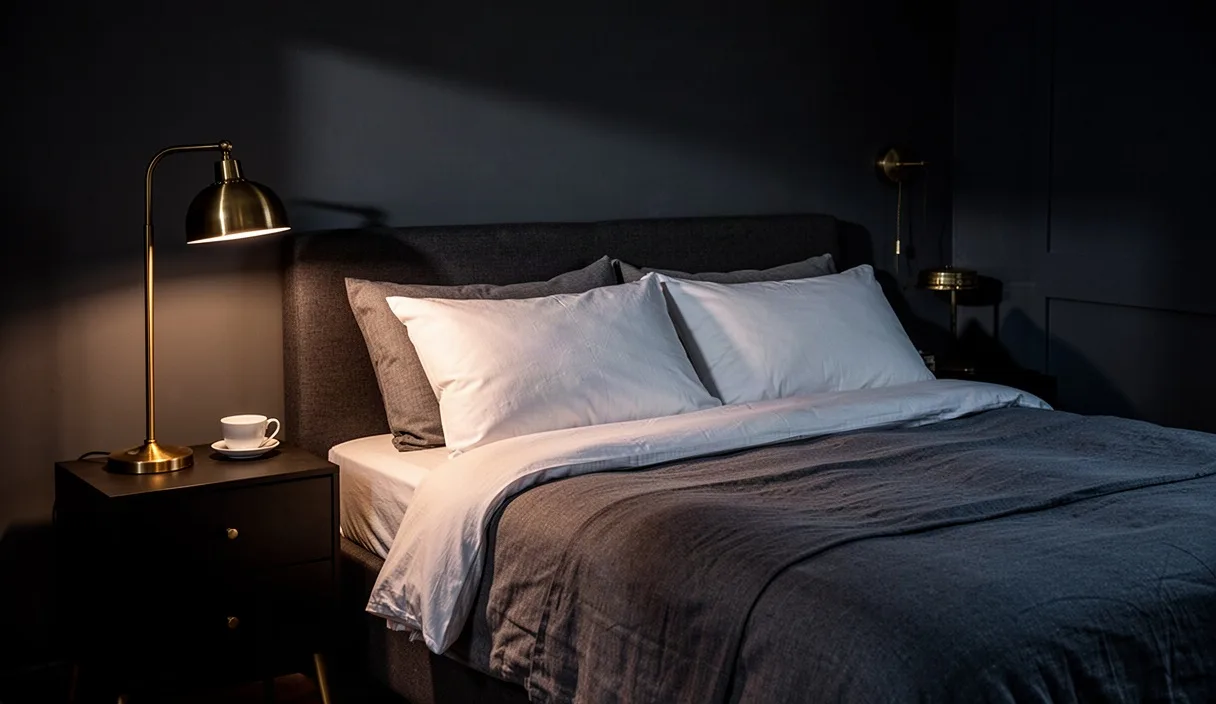

Readers who write to this journal about sleep rarely ask for a single remedy. More often, they describe a pattern: adequate hours in bed, yet a morning that feels unrefreshed, or a schedule that shifts so often from weekday to weekend that the body seems to forget what time it is. Sleep quality, as distinct from sleep quantity, depends on a set of habits that reinforce one another. None of these habits works in isolation, and none requires a prescription.
This checklist gathers the practices most consistently discussed in sleep research and clinical guidance, organised into sections a reader can act on this week. It does not promise a fixed number of extra minutes of rest, nor does it substitute for the advice of a physician or a sleep specialist, particularly where restful sleep support, sleep apnoea, or another diagnosed condition is involved. It is intended as a practical starting point for adults seeking to improve the reliability and depth of their sleep through timing, light, temperature, and routine.
Why Consistency Matters More Than Duration Alone
Two people who each sleep seven hours a night can experience very different degrees of restoration if one keeps a fixed schedule and the other varies bedtime by two or three hours across the week. The body's circadian system, governed largely by the suprachiasmatic nucleus in the brain, relies on regular cues to time hormone release, including the evening rise of melatonin and the morning rise of daily balance. Irregular sleep timing disrupts these cues even when total sleep time looks adequate on paper.
A useful working target, cited by sleep clinicians, is to keep bedtime and wake time within a window of roughly thirty to sixty minutes across the entire week, weekends included. This does not mean rigid adherence is required every single night; it means that large weekend shifts, sometimes called "social jet lag," should be kept modest.
Consider a simple comparison: an office worker who sleeps from 11:00 pm to 6:30 am on weekdays but from 2:00 am to 10:00 am on weekends is effectively asking the body to adjust to a new time zone twice a week. Even if the weekend total is longer, the Monday morning experience is often reported as more fatigued, not less.
- Choose a wake time first, since it anchors the circadian clock more strongly than bedtime.
- Keep that wake time within an hour on both work and rest days.
- Allow bedtime to shift naturally within a narrow band rather than forcing an exact number of hours.
Morning and Evening Light Exposure
Light is the strongest external signal the circadian system receives. Morning light exposure, ideally within the first hour after waking, helps set the internal clock and supports alertness during the day. Ten to twenty minutes outdoors, even under an overcast sky, delivers considerably more lux than most indoor lighting, which rarely exceeds a few hundred lux compared with several thousand outdoors.
In the evening, the opposite principle applies. Bright overhead lighting in the hour or two before bed can delay the release of melatonin, the hormone associated with sleep onset. Dimming household lights, switching to lamps placed lower in the room, or using warmer colour temperatures in the evening are simple adjustments many households have already adopted for other reasons, and they carry a secondary benefit for sleep timing.
For those who work night shifts or in windowless environments, a physician or sleep specialist may recommend a light therapy device with a specified lux output, used at a particular time of day. This is a more targeted intervention and is best discussed individually rather than adopted without guidance, since timing errors can shift the clock in the wrong direction.
Caffeine and Alcohol Timing
Caffeine has a half-life in most adults of roughly five to six hours, meaning that a cup of coffee taken at 3:00 pm may still leave a meaningful fraction of its stimulant effect in the bloodstream at 9:00 pm. Sensitivity varies considerably by individual metabolism, so some people tolerate an afternoon espresso without noticeable effect on sleep, while others report lighter, more fragmented sleep after any caffeine consumed past midday.
A commonly cited guideline is to stop caffeine intake at least eight to ten hours before the intended bedtime, which for an 11:00 pm bedtime would suggest a cutoff somewhere near 1:00 pm to 3:00 pm. Readers who are unsure of their own sensitivity might try eliminating caffeine after 2:00 pm for one week and noting any change in how quickly they fall asleep or how often they wake during the night.
Alcohol presents a different pattern. It can shorten the time it takes to fall asleep, but it tends to fragment sleep in the second half of the night as the body metabolises it, often producing lighter sleep and earlier waking. A gap of at least three to four hours between the last drink and bedtime is a reasonable starting point, though individuals with any concern about alcohol dependence should raise the matter with a healthcare provider rather than treat timing alone as a solution.
Setting Up a Wind-Down Routine
A wind-down routine signals to the body that the day's activity is ending, in much the same way a consistent set of cues once told a household that dinner was ready. The routine does not need to be elaborate. Twenty to thirty minutes of low-stimulation activity, repeated in a similar order most nights, appears to be more useful than any single activity chosen in isolation.
Examples that many readers report finding workable include reading a physical book under dim light, light stretching, writing a short list of the next day's tasks to prevent rumination once in bed, or a brief period of quiet conversation without a screen present. The specific content matters less than the repetition and the absence of bright light or urgent decision-making.
A practical sequence for a household with an 11:00 pm bedtime might look like this:
- 10:30 pm: dim the main lights, put devices in another room or on a charging dock away from the bed.
- 10:35 pm: brief hygiene routine, including brushing teeth and changing into sleepwear.
- 10:45 pm: ten minutes of reading or quiet reflection.
- 10:55 pm: lights off, aiming for a consistent lie-down time even if sleep does not come immediately.
Those who find their mind racing with tasks or worries at this stage sometimes benefit from writing concerns down earlier in the evening rather than in bed, a technique occasionally called a "worry list," so the bed itself is not associated with problem-solving.
Bedroom Temperature and Light Conditions
Core body temperature naturally drops in the evening as part of the process that initiates sleep, and a bedroom that is too warm can work against this. Sleep researchers frequently cite a range of roughly 16 to 19 degrees Celsius (about 60 to 67 degrees Fahrenheit) as comfortable for most adults, though personal preference and bedding vary this range somewhat.
Light in the bedroom itself matters as much as light earlier in the evening. Even modest amounts of light from a streetlamp through thin curtains, a charging indicator on an electronic device, or a hallway light under the door can be enough to disturb sleep in people who are sensitive to it. Blackout curtains, an eye mask, or simply covering small LED lights with tape are inexpensive fixes.
| Factor | Commonly cited target | Simple adjustment |
|---|---|---|
| Room temperature | 16 to 19 degrees Celsius | Lower thermostat setting or lighter bedding |
| Ambient light | As close to full darkness as practical | Blackout curtains, eye mask, cover LEDs |
| Noise | Consistent, low-level or absent | White noise machine or earplugs if variable noise is present |
Noise is worth a brief mention alongside temperature and light. Sudden or variable noise, such as traffic or a neighbour's activity, tends to be more disruptive than a constant low-level sound. A fan or a dedicated white noise device can mask irregular noise with something steadier, which some sleepers find preferable to silence.
Screen Use Before Bed: What the Evidence Suggests
The relationship between screens and sleep is often discussed in terms of blue light suppressing melatonin, and there is laboratory evidence that bright screen light close to the eyes can delay melatonin release compared with dim light exposure. However, several sleep researchers have noted that the content and engagement of screen use, not only its light output, may account for a meaningful share of the disruption. Scrolling through work email, checking financial news, or engaging in an argument by text message can raise mental alertness regardless of the light involved.
A reasonable, evidence-informed approach is twofold: reduce screen brightness and enable any built-in night-mode colour filter in the hour before bed, and separately, choose the content viewed with some care, favouring passive or low-stakes material over anything likely to provoke a strong emotional or cognitive response.
For readers unwilling to give up screens entirely before bed, a middle path some have adopted is to switch from a phone held close to the face to a device viewed at a greater distance, such as a television across the room, which reduces direct light exposure to the eyes even if the content itself is similar.
Common Mistakes
A frequent error is treating the weekend as a separate schedule entirely, undoing five nights of consistency with two nights of significant drift. Another is relying on a single change, such as buying blackout curtains, while leaving caffeine intake or screen habits unchanged, then concluding that "nothing works" when the combined effect was never tested. A third mistake is using alcohol deliberately as a sleep aid; while it can shorten the time to fall asleep, the fragmented second half of the night it tends to produce often outweighs that initial benefit. Finally, some readers try to force sleep by remaining in bed for long stretches while awake and frustrated; sleep specialists generally suggest getting up briefly and returning to bed once drowsy, rather than reinforcing an association between the bed and wakeful frustration.
A Simple Weekly Checklist to Follow
The following checklist condenses the sections above into a format that can be reviewed at the end of each day for one week, allowing a reader to identify which habits are already in place and which deserve attention first.
- Woke and went to bed within roughly one hour of the usual time, including on rest days.
- Spent ten to twenty minutes in outdoor or bright light within an hour of waking.
- Dimmed household lighting in the hour or two before bed.
- Stopped caffeine intake by early to mid-afternoon.
- Left at least three to four hours between any alcohol consumed and bedtime.
- Followed a consistent, low-stimulation wind-down sequence of twenty to thirty minutes.
- Kept the bedroom cool, dark, and free of small light sources.
- Reduced screen brightness or switched to lower-stakes content in the final hour before bed.
Readers who track this checklist for two or three weeks and still experience persistent difficulty falling asleep, staying asleep, or waking feeling unrested should consider raising the matter with a general practitioner or a sleep specialist, since some causes, including sleep apnoea, restless legs syndrome, and certain mood or thyroid conditions, require assessment beyond habit adjustment alone. For most readers without such underlying concerns, the habits outlined here, applied together rather than in isolation, represent a reasonable and low-risk starting point before considering any medication for sleep.